
Three Different Ways to Connect
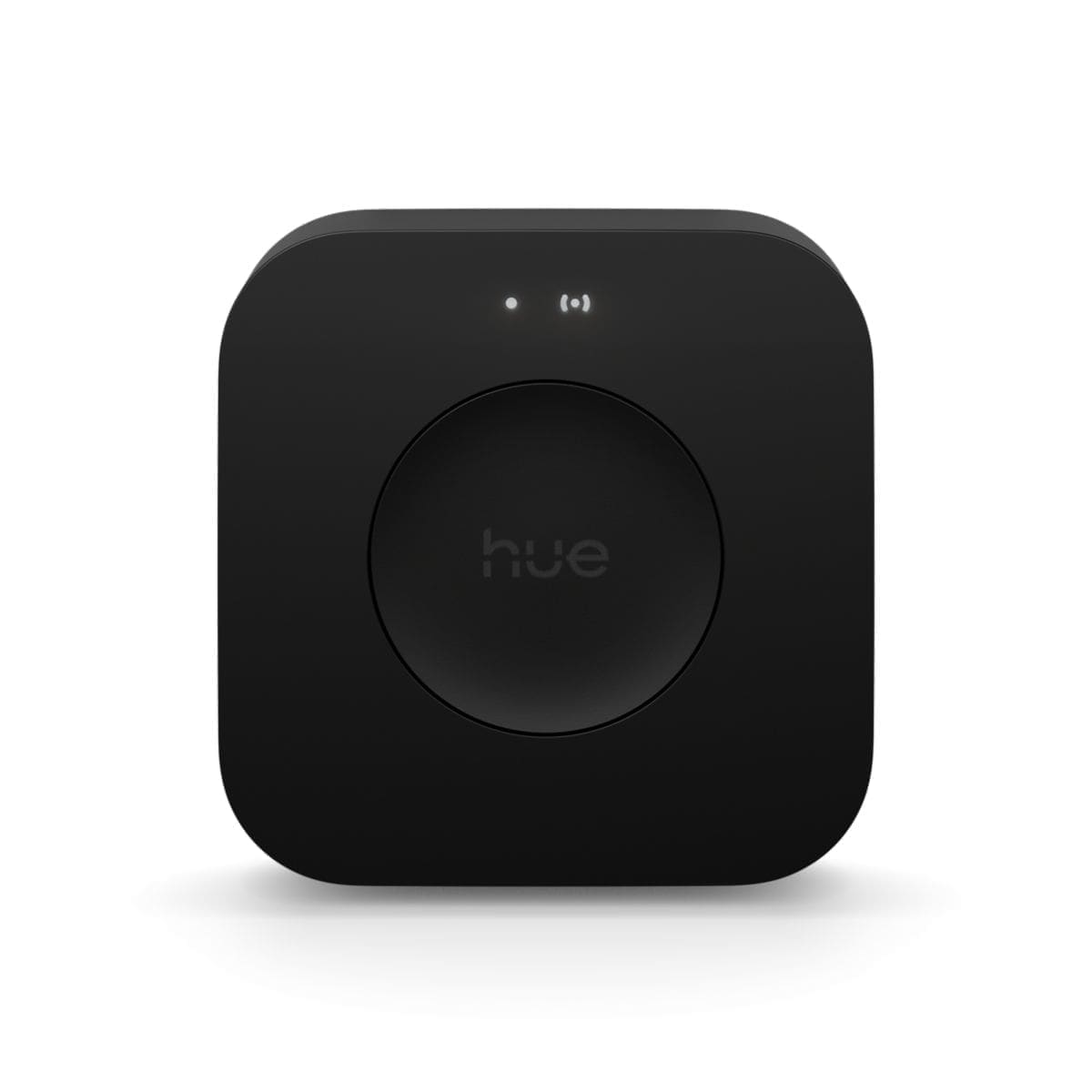
Philips Hue is the only one of the three built around a dedicated hub. Bulbs talk to a Hue Bridge over Zigbee, a low-power mesh protocol that runs independently of your Wi-Fi, and the Bridge then talks to your router over Ethernet. The standard Hue Bridge costs around £62.99 direct from Philips Hue's own UK store, while the newer Hue Bridge Pro — which supports up to 150 lights and doubles as a Matter/Thread border router — costs around £79.99. Every mains-powered Hue bulb also acts as a Zigbee repeater, so the mesh gets more reliable, not less, as you add bulbs.
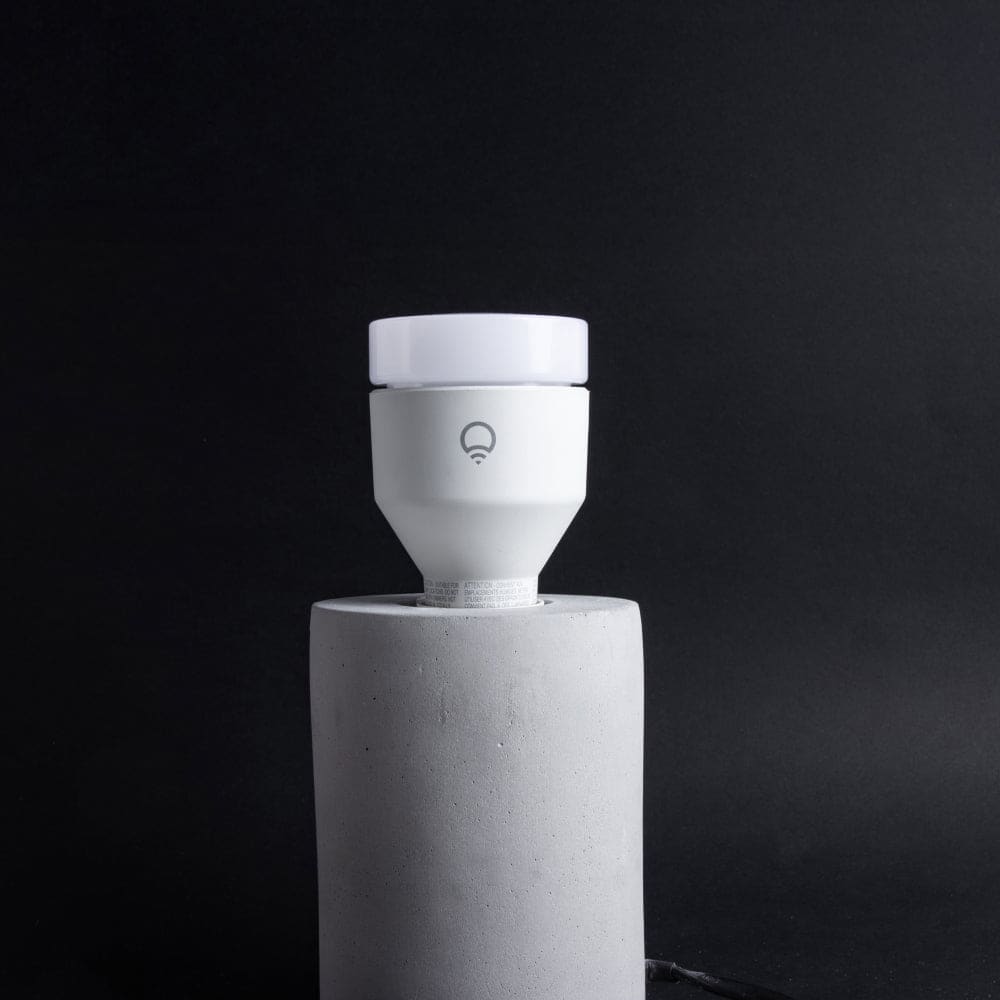
WiZ and LIFX both skip the hub entirely: each bulb connects straight to your home's 2.4 GHz Wi-Fi network. Screw the bulb in, add it in the app, join it to Wi-Fi, and you're done in under two minutes — no dongle, no bridge, no extra hardware cost. The trade-off is that every WiZ or LIFX bulb takes up a permanent slot on your router's device table. For a handful of bulbs this is a non-issue; fit out an entire house with twenty or more Wi-Fi bulbs and a budget router can start to struggle.
WiZ and LIFX aren't identical despite sharing the hub-free approach. WiZ is a Signify brand (the same parent company as Philips Hue) built as a cheap, mass-market Wi-Fi line, while LIFX has always positioned itself as the premium hub-free option — brighter bulbs, wider colour range, built-in effects — at a price closer to Hue than to WiZ.
UK Pricing
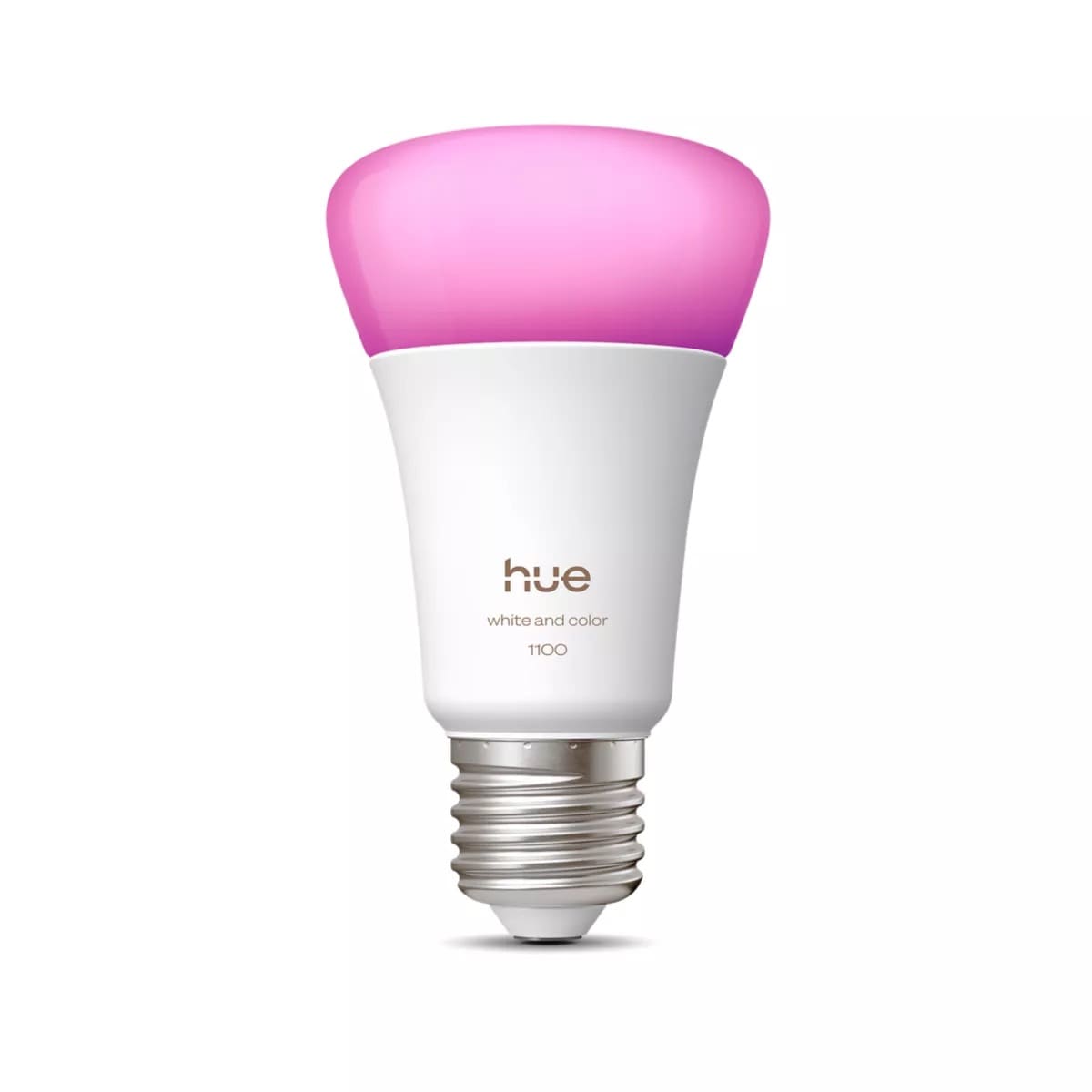
Prices vary by retailer and change frequently, so treat these as indicative ranges rather than fixed figures. For a like-for-like comparison, all three brands sell a broadly equivalent full-colour A60 (standard bulb shape, E27 Edison screw, some also in B22 bayonet):
- Philips Hue White and Colour Ambiance A60 (1100 lm): around £45 per bulb on Amazon UK, plus the one-off Hue Bridge cost (£62.99–£79.99) if you don't already own one.
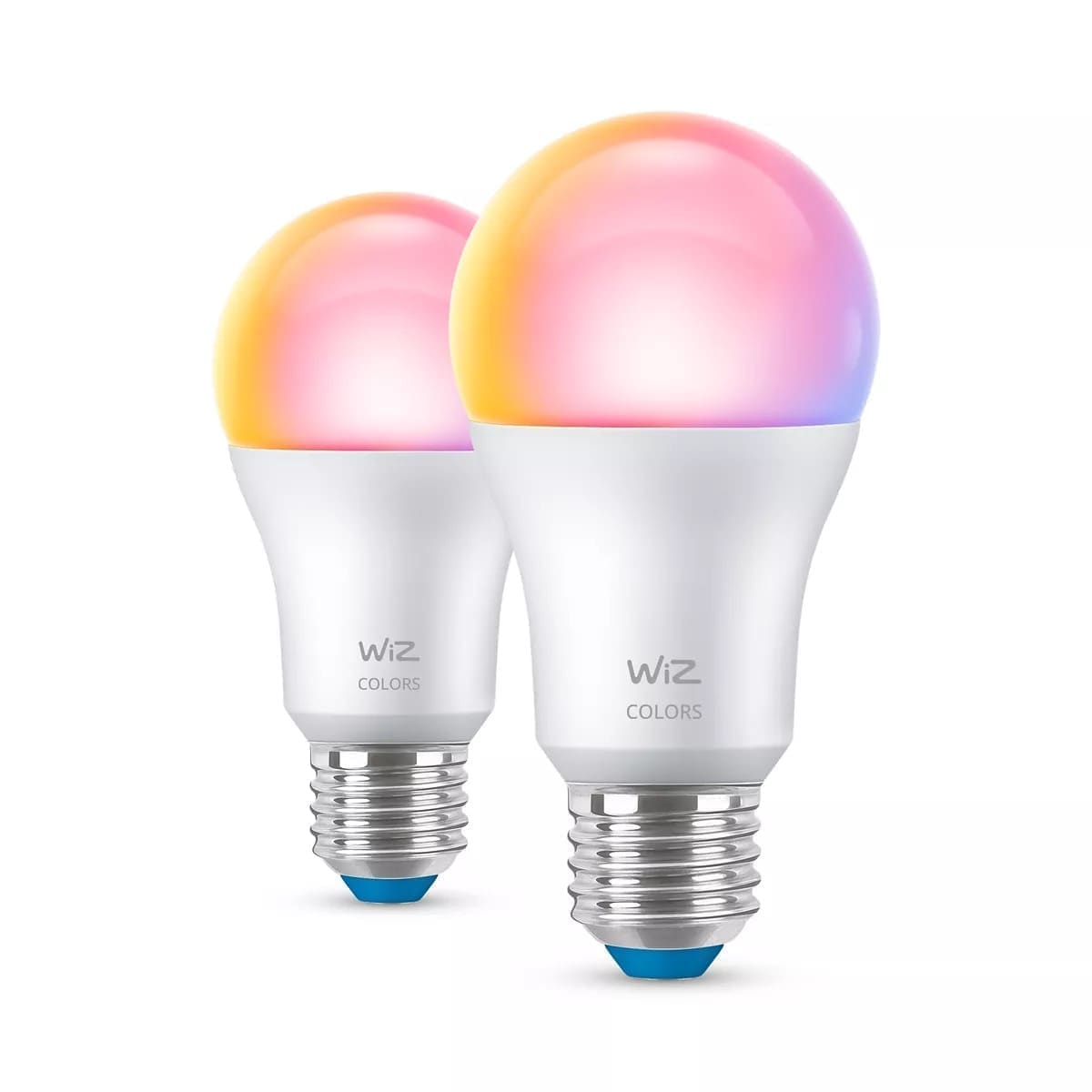
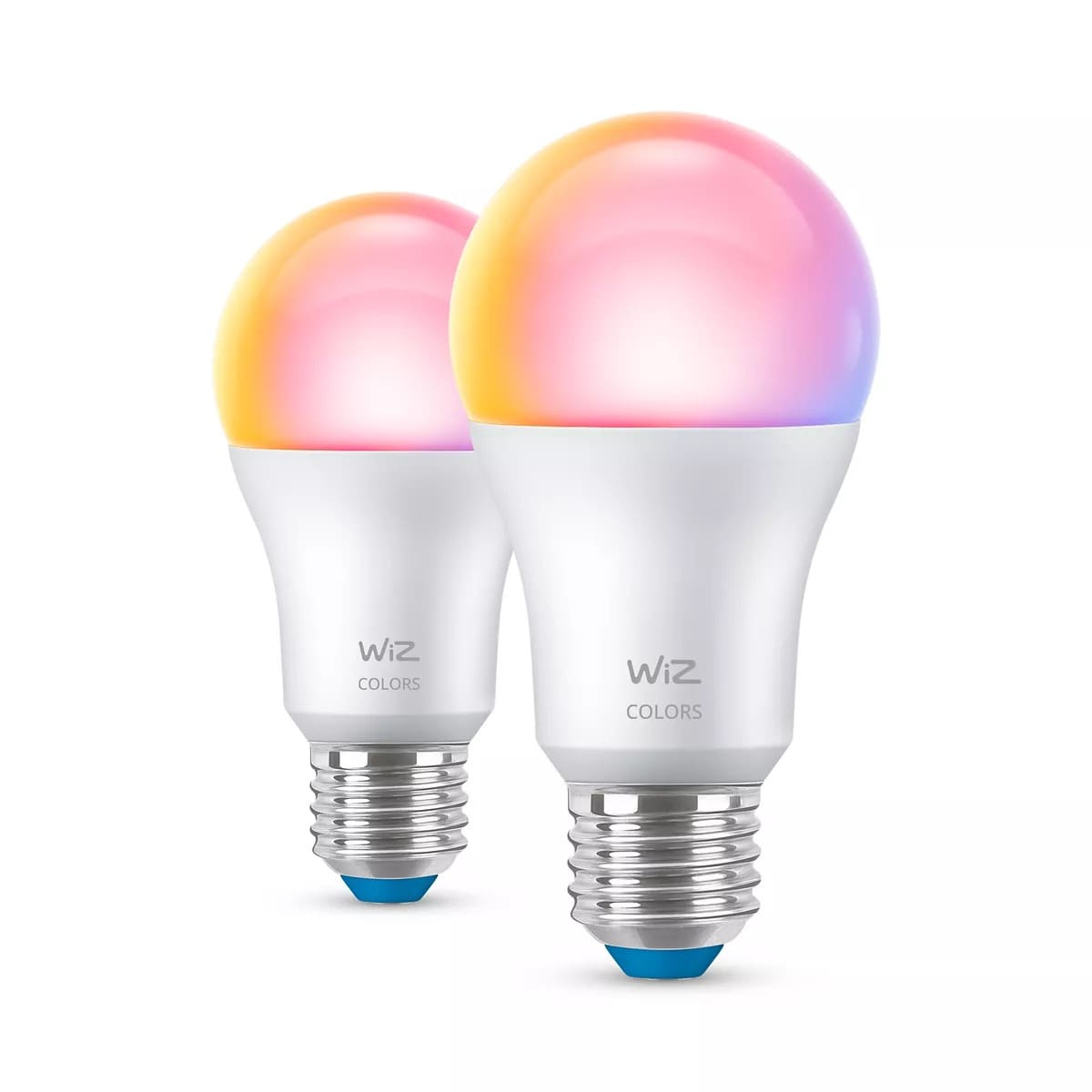
- WiZ Colour A60 (806 lm): around £11 per bulb on Amazon UK, no hub required.
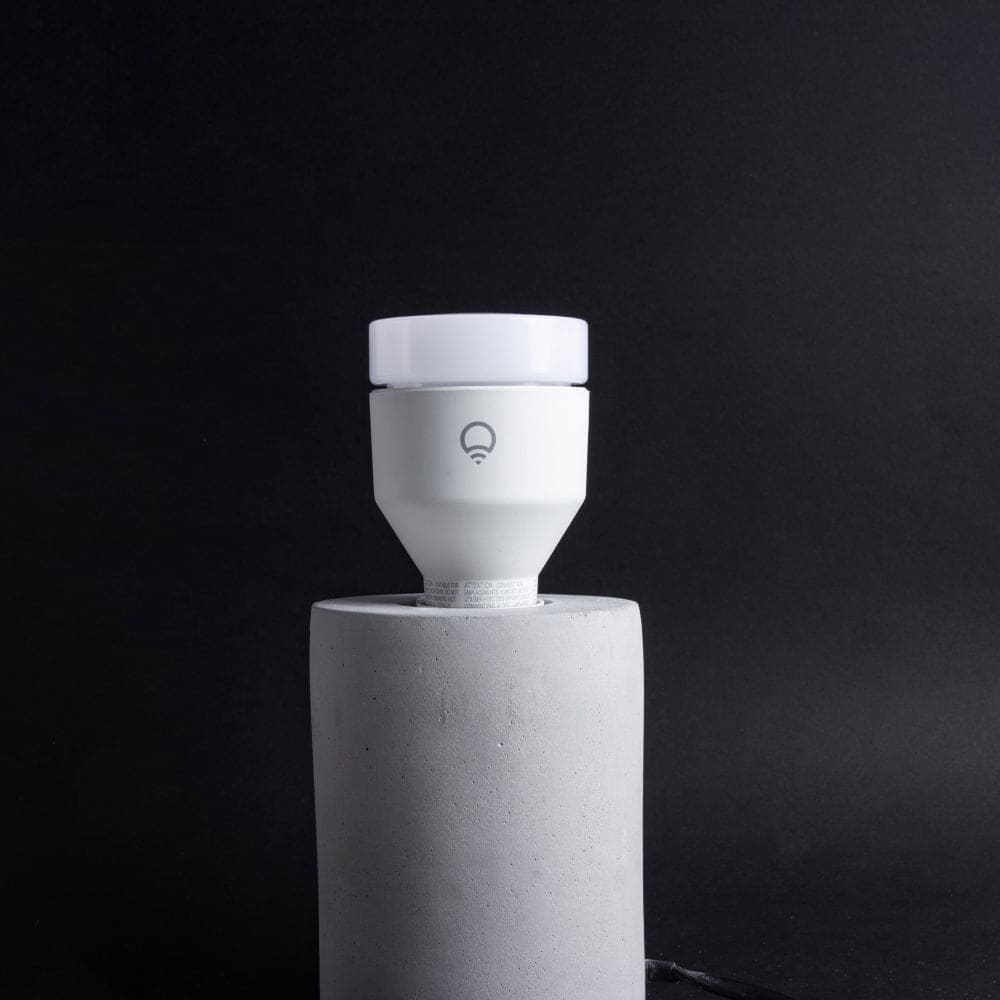
- LIFX Colour A60 (1200 lm): around £30 per bulb on Amazon UK, no hub required.
On a per-bulb basis, WiZ is roughly a quarter of the price of Hue, and LIFX sits in between. For a single room with two or three bulbs, WiZ is the cheapest way into colour smart lighting by a wide margin. For a whole-home fit-out of fifteen-plus bulbs, the Hue Bridge's fixed cost stops mattering much per bulb, but Hue still ends up the most expensive of the three overall — you're paying for the Zigbee mesh reliability and the wider accessory ecosystem, not just the light.
Brightness and Colour
Comparing the standard colour A60 from each brand: LIFX is the brightest at 1200 lm, Hue's White and Colour Ambiance A60 reaches 1100 lm, and WiZ's Colour A60 is the dimmest of the three at 806 lm (WiZ pitches it as a 60 W-incandescent equivalent, which the other two comfortably exceed). All three cover a similarly wide colour temperature range and full RGB colour, with a colour rendering index (CRI) of roughly 80 on WiZ and LIFX versus closer to 90 on Hue — meaning Hue's whites and skin tones render slightly more naturally, while WiZ and LIFX are tuned more for vivid, saturated colour scenes than colour-critical lighting.
Fitting-wise, all three are available in E27 (Edison screw), and Hue and WiZ both also sell B22 bayonet versions for older UK light fittings — worth checking before you buy, since LIFX's bayonet range is more limited.
Home Assistant Integration
This is where the three genuinely diverge, and it matters if you're running Home Assistant rather than just each brand's own app.
Philips Hue has the deepest options. The official hue integration talks to the Hue Bridge locally over a push-based event stream, so state changes appear in Home Assistant instantly with no polling delay, and it also exposes Bridge-side features like dynamic scene crossfading and Hue Entertainment sync. If you'd rather skip the Bridge entirely, Hue bulbs pair directly to a Zigbee coordinator via ZHA or Zigbee2MQTT — see our Zigbee2MQTT setup guide — though you then lose Bridge-only features like Entertainment sync and server-side scene crossfading.
WiZ uses Home Assistant's official wiz integration, which talks directly to the bulb over local UDP with no cloud round-trip and no hub in between. It's push-based, so it's fast, and it exposes WiZ's built-in dynamic scenes (Ocean, Party, Rhythm, and others) as selectable effects. The one recurring niggle: UDP auto-discovery is unreliable across VLANs or subnets larger than a /24, so bulbs on a segmented IoT network often need to be added with a manual IP address rather than relying on discovery.
LIFX also integrates natively with no hub, but the lifx integration works differently again — it polls the bulb locally every few seconds rather than pushing state changes, so status updates in Home Assistant can lag slightly behind reality compared with Hue or WiZ. Since a 2022 overhaul each LIFX bulb gets its own config entry with automatic IP-change retry, which fixed most of the discovery drop-outs that used to plague VLAN'd IoT networks. Single-zone bulbs like the Colour A60 only support two software effects (Color Loop and Pulse) in Home Assistant — LIFX's fancier Move, Flame, and Morph effects are reserved for multizone lightstrips and matrix panels.
In short: Hue offers the most sophisticated automation surface and the option of going fully local without a cloud account via Zigbee; WiZ is the simplest to add and fastest to react; LIFX sits in the middle, reliable but slightly slower to reflect state changes.
Ecosystem and Extra Features
Philips Hue has by far the widest product range of the three: lightstrips, outdoor garden lighting, ceiling fixtures, wall switches, motion sensors, and the Hue Play HDMI Sync Box for TV ambilight effects (see our Hue Sync Box review and Hue Lightstrip Plus review). If you want a lighting scheme that spans multiple fixture types working together in one app, Hue is the only one of the three built for that.
WiZ punches above its price with SpaceSense — a passive infrared motion mode built directly into the bulb, letting it trigger automations without a separate PIR sensor — plus energy monitoring and vacation-mode scheduling in the app.
LIFX leans on built-in dynamic effects and raw output: Color Loop, Pulse, and on multizone products, Move and Flame effects that run natively on the bulb's own firmware without needing Home Assistant or the app open.
Matter Support in 2026
All three brands now support Matter, the cross-brand smart home standard, but they get there differently. The Philips Hue Bridge and Bridge Pro both expose your Hue lights to any Matter controller — Apple Home, Google Home, Alexa, SmartThings, or Home Assistant — over the existing Zigbee/Bridge connection. WiZ added Matter via a firmware update in 2022 for products manufactured from Q2 2021 onwards, running Matter over Wi-Fi rather than Thread. LIFX began rolling out Matter firmware updates from September 2025, bringing its bulbs onto Apple Home, Samsung SmartThings, and Home Assistant, with Google Home and Amazon Alexa support following through 2026 — check the specific model you're buying, since not every older LIFX bulb is eligible for the update.
Philips Hue vs WiZ vs LIFX: At a Glance
| Spec | Philips Hue (A60 Colour) | WiZ (A60 Colour) | LIFX (A60 Colour) |
|---|---|---|---|
| Connectivity | Zigbee via Hue Bridge | Wi-Fi, hub-free | Wi-Fi, hub-free |
| Hub cost | ~£62.99–£79.99 (one-off) | None | None |
| Typical bulb price | ~£45 | ~£11 | ~£30 |
| Brightness | 1100 lm | 806 lm | 1200 lm |
| CRI | ~90 | ≥80 | 80 |
| HA integration style | Local push (Bridge) or native Zigbee (ZHA/Z2M) | Local push (UDP) | Local polling |
| Matter support | Via Bridge, since 2022 | Via Wi-Fi firmware update, since 2022 | Rolling out from Sept 2025 |
| Ecosystem breadth | Widest (strips, sensors, outdoor, Sync Box) | Narrow, plus SpaceSense motion | Narrow, strong built-in effects |
Which Should You Buy?
Choose Philips Hue if you're fitting out a whole home, want the widest accessory range and TV/gaming sync, or want the deepest Home Assistant integration via Zigbee. The Bridge cost is real, but it buys a self-healing mesh that gets more reliable as you scale up, plus the option to bypass the Bridge entirely with ZHA or Zigbee2MQTT. Running costs are modest either way — see our Philips Hue running cost breakdown for the actual numbers.
Choose WiZ if budget is the deciding factor. At roughly a quarter of Hue's per-bulb price with no hub to buy, and a genuinely good local Home Assistant integration, WiZ is hard to beat for one or two rooms. See our full WiZ smart lights review for the complete range.
Choose LIFX if you want the brightest, most vivid hub-free bulb and don't mind paying closer to Hue prices for it. It's the best middle ground for buyers who want more punch than WiZ without committing to a Zigbee bridge. Read our full LIFX review for more detail.
For a wider view of the market beyond these three, our best smart bulbs UK roundup covers budget alternatives too.